by Priyanwada Atapattu
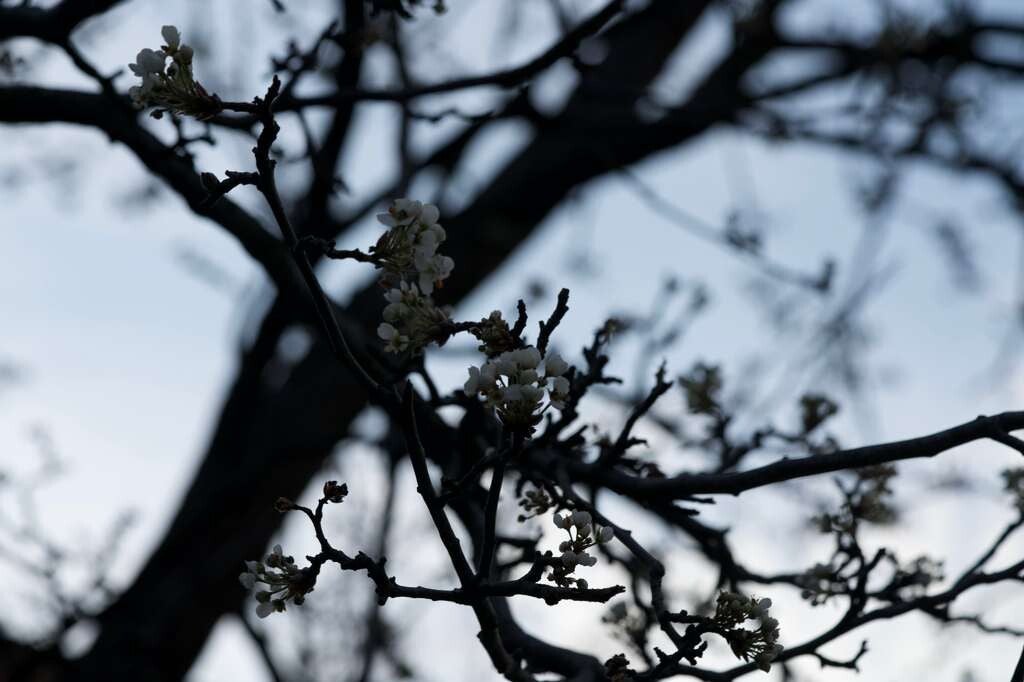
The spread of Callery pear across Athens is not only evident in its increasing abundance but also in how its biological timing shifts across landscapes. During field observations, a consistent and striking pattern emerges: trees located in the urban core bloom noticeably earlier than those in surrounding rural or less-developed areas. This difference is not subtle, city trees often reach peak flowering while rural individuals are still in early bud stages. Such a pattern highlights how urban environments are actively shaping the phenology of this already aggressive species.
This early blooming is most likely driven by the urban heat island effect, where built surfaces such as asphalt, concrete, and buildings absorb and retain heat, elevating temperatures in city centers compared to rural surroundings. In Athens, even small increases in temperature especially during late winter and early spring can act as powerful cues for flowering. Warmer nighttime temperatures, reduced frost frequency, and altered light environments between buildings create a microclimate that effectively signals trees to break dormancy earlier than their rural counterparts.
From an ecological perspective, this shift in timing represents a population-level cue, where individuals of the same species respond differently depending on their environment. For an invasive species like Callery pear, this is particularly important. Earlier flowering can translate into a longer reproductive window, increased chances of successful pollination, and ultimately greater seed production. In this way, urban populations may not just differ from rural ones they may actually enhance the invasive potential of the species by gaining a temporal advantage in reproduction.

Importantly, this observation suggests that cities like Athens are not merely locations where invasive species exist, but environments that can amplify their success. The earlier blooming of Callery pear in urban areas may allow it to establish, reproduce, and spread more efficiently into surrounding rural landscapes. This reinforces the idea that urban ecology and invasion biology are tightly linked, and that managing invasive species requires understanding not just where they grow, but how urban conditions modify their life cycles.
Add comment
Comments