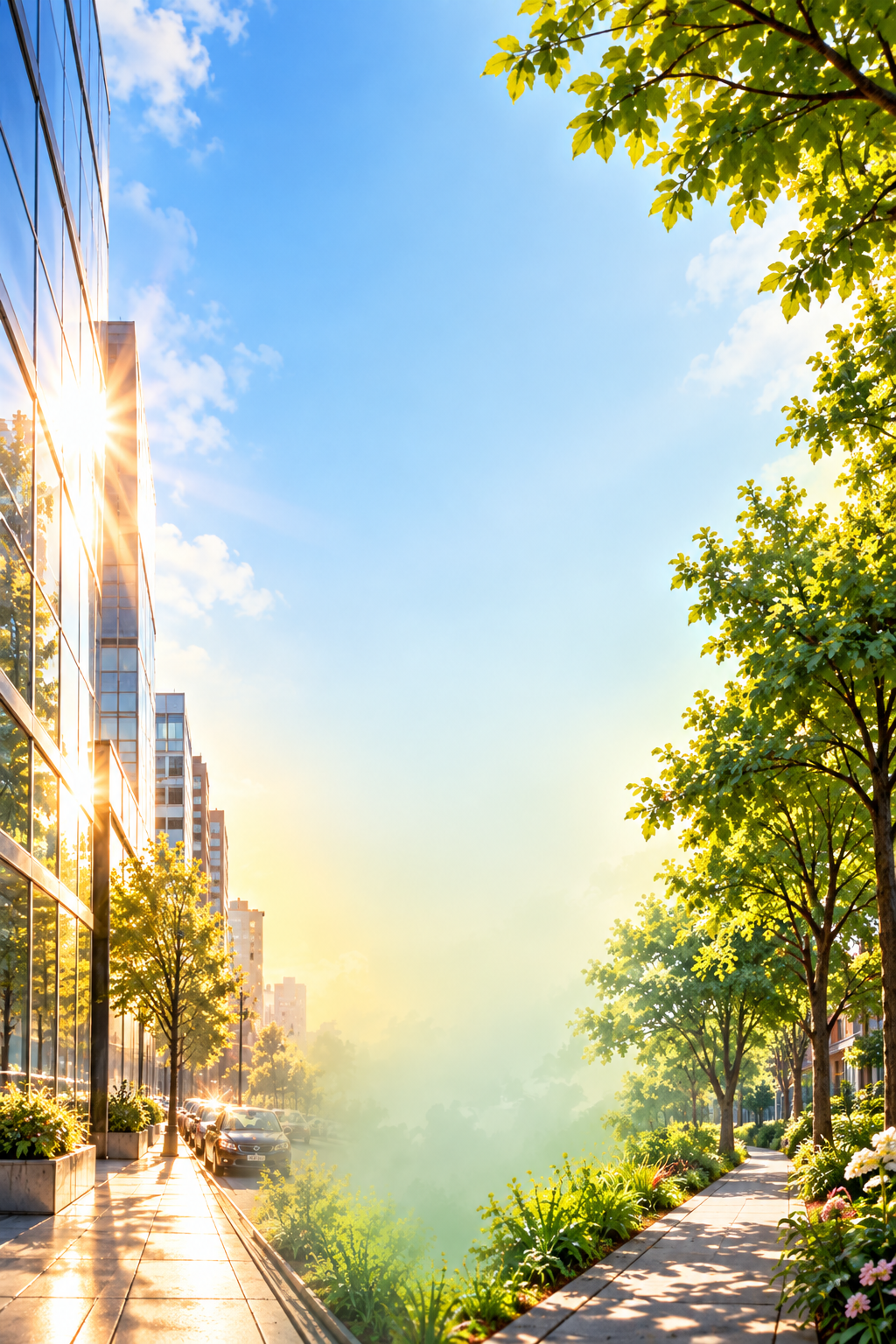
Urban Glare: When City Surfaces Become Too Bright
Cities are filled with surfaces that interact strongly with sunlight. Glass-covered buildings, metal façades, concrete walls, paved streets, parked vehicles, and even water can reflect light into the surrounding environment. On a bright day, these reflections can sometimes become intense enough to cause visual discomfort or temporarily make it difficult to see. This phenomenon can be described as urban glare.
Glare may seem like a relatively minor consequence of urban development, but it demonstrates an important principle of urban ecology: changing the physical structure of a landscape also changes its environmental conditions. Just as buildings and pavement modify temperature, wind, water movement, and habitat availability, they also influence how light moves through the urban environment.
What Is Urban Glare?
Glare occurs when the brightness reaching our eyes is greater than the level to which our vision is adapted, or when very bright and dark areas occur together within the same field of view. In cities, this can happen when sunlight strikes a highly reflective surface and is redirected toward pedestrians, drivers, nearby buildings, or vegetation. Anyone who has walked past a glass building on a sunny afternoon has probably experienced a simple form of this effect. The surrounding street may be comfortably illuminated, but a strong reflection from a window or polished surface can suddenly appear extremely bright.
Urban glare should not be confused with light pollution. Light pollution usually refers to excessive or poorly directed artificial light, particularly at night. Urban glare can occur during both day and night. During the day, sunlight reflected from buildings and other surfaces can be an important source, while at night poorly designed streetlights, signs, vehicle headlights, and building illumination can produce glare.
Why Do Cities Create So Much Glare?
Natural landscapes contain many surfaces that scatter or absorb incoming solar radiation. Tree canopies, grasses, soils, and other vegetation create irregular surfaces that distribute light in many directions. Cities replace much of this complexity with constructed materials. Large windows, smooth metal panels, polished stone, concrete, and other materials interact with sunlight differently. Some surfaces produce diffuse reflections, while smooth surfaces can generate much more directional reflections.
The orientation and geometry of buildings also matter. As the position of the sun changes throughout the day and across seasons, the direction of reflected sunlight changes as well. A building that creates little noticeable glare in the morning might produce a strong reflection during the afternoon. This means that urban glare is not determined simply by how reflective a material is. It emerges from an interaction among surface properties, building orientation, solar angle, surrounding structures, vegetation, and the position of the observer.
Glass Buildings and Concentrated Sunlight
Modern architecture frequently incorporates large areas of glass. Glass can provide natural illumination inside buildings and create visually striking façades, but it can also produce strong exterior reflections. Building shape can make this particularly important. Flat glass surfaces generally redirect sunlight according to their orientation, whereas curved or angled façades can produce more complicated patterns of reflected light. Under unusual circumstances, concave reflective surfaces can concentrate solar radiation into relatively small areas. For urban planners and architects, this illustrates why the environmental effects of a building extend beyond its physical footprint. A structure can influence the light environment of neighboring sidewalks, roads, buildings, vegetation, and public spaces.
Glare and the Urban Microclimate
Glare is primarily a visual phenomenon, but the way urban surfaces interact with solar radiation is also connected to the urban energy balance. When solar radiation reaches a surface, some energy is reflected and some is absorbed. Dark asphalt, for example, can absorb substantial solar energy and become very hot even though it may not produce the same intense visible reflection as glass. A highly reflective surface may return more incoming radiation to its surroundings.
For this reason, glare and urban heat are related but not equivalent. A surface that causes strong glare is not necessarily the hottest surface, and a very hot urban surface does not necessarily create strong glare. This distinction is important when designing cities. Strategies intended to reduce heat by increasing surface reflectivity need to consider where the reflected radiation goes and whether it could create uncomfortable conditions elsewhere.
What Does Urban Glare Mean for People?
One of the clearest consequences of glare is reduced visual comfort. Intense reflections can cause people to squint, turn away, or experience temporary difficulty distinguishing objects from their surroundings. For drivers and cyclists, glare can become particularly important because visibility is essential for recognizing pedestrians, traffic signals, vehicles, and obstacles. Reflections from buildings, wet pavement, vehicle surfaces, or low-angle sunlight can temporarily reduce visual clarity.
Pedestrian experience matters as well. A public space may contain benches, attractive architecture, and good accessibility but still be uncomfortable if people are repeatedly exposed to intense sunlight and reflection. Environmental quality in cities therefore depends on more than temperature or air quality; it also includes the sensory conditions experienced by people.
What About Urban Plants?
Plants require sunlight, but urban vegetation often experiences a light environment very different from vegetation in natural ecosystems. A street tree may receive direct sunlight from above while also receiving reflected radiation from nearby windows, walls, pavement, and vehicles. At other times, the same tree may spend much of the day shaded by buildings. Urban plants therefore experience complicated combinations of shade, direct sunlight, reflected radiation, and heat.
Intense reflected solar radiation can potentially increase leaf and surface temperatures, particularly when combined with high air temperatures and limited soil moisture. Trees growing in small planting pits surrounded by pavement may already experience water stress, making additional thermal loads potentially important. However, responses depend strongly on the species, site, building geometry, and intensity and duration of exposure. Reflected light should therefore be considered one component of the broader environmental conditions experienced by urban vegetation rather than assumed to be universally harmful.
Urban Wildlife and Artificial Glare
At night, glare becomes closely connected with artificial lighting. Streetlights, illuminated buildings, advertising displays, and vehicle lights can create strong contrasts between brightly illuminated and dark areas. Artificial nighttime lighting can alter the behavior of many organisms. Insects may be attracted to light sources, while birds and other animals can experience changes in orientation, movement, feeding, or activity patterns. The ecological consequences depend on factors such as light intensity, wavelength, timing, and the species involved. Reducing unnecessary nighttime glare therefore has benefits beyond human visual comfort. Thoughtful lighting design can contribute to maintaining darker and more continuous habitat for urban wildlife.
Can Urban Trees Help?
Urban vegetation offers an interesting way to modify the urban light environment. Tree canopies intercept and scatter sunlight, while their shade reduces the amount of direct solar radiation reaching pavement, walls, parked vehicles, and other potentially reflective surfaces. Trees can therefore influence glare both directly and indirectly. A canopy positioned between a reflective façade and a sidewalk may interrupt reflected sunlight, while shading pavement can change the overall light environment experienced by pedestrians.
Vegetation also provides benefits that reflective screens or architectural structures cannot provide alone. Trees simultaneously contribute to cooling, stormwater interception, carbon storage, habitat creation, and the visual quality of streets. This does not mean that trees should simply be planted wherever glare occurs. Species selection, mature canopy size, rooting space, infrastructure conflicts, water availability, and building orientation all need to be considered.
Designing Cities With Light in Mind
Managing urban glare begins with recognizing light as part of the urban environment. Architects and planners can evaluate how building materials and façade geometry interact with sunlight before construction. Highly reflective surfaces can be positioned or treated to reduce problematic reflections, while shading structures and vegetation can be incorporated into site design. Nighttime lighting can similarly be directed toward areas where illumination is actually required rather than allowing unnecessary light to spread upward or sideways. Appropriate shielding, intensity, placement, and operating schedules can reduce glare while maintaining safety and accessibility. Green infrastructure can complement these approaches. Street trees, green roofs, vegetated courtyards, and other planted spaces introduce surfaces that interact with solar radiation very differently from glass, metal, and pavement.
Looking at Cities Through Light
Urban ecology often focuses on obvious environmental changes such as habitat loss, warmer temperatures, altered hydrology, pollution, and soil disturbance. Yet urbanization also transforms something we experience every day: light. Every building, road, tree, window, and open space contributes to the way sunlight and artificial light move through a city. Sometimes those interactions create comfortable shaded streets; in other situations, they produce intense reflections and glare. Understanding urban glare therefore encourages us to see cities differently. The urban environment is not simply a collection of buildings surrounded by patches of nature. It is a constantly interacting system in which architecture, vegetation, climate, light, and human activity shape one another. Designing greener cities means paying attention not only to what we build and plant, but also to the environmental conditions those choices create.
by Priyanwada Atapattu
Add comment
Comments